
Gold Coast builds have a reputation for looking good in photos. The real test is what they look like after two wet seasons, a salty breeze, and a few years of daily life. That’s where JGC Builders has carved out a name: not by promising “premium,” but by sweating the parts most people never notice until something fails.
One-line truth: pretty isn’t the same as durable.
What “Gold Coast quality” really means (when you strip the marketing away)
Gold Coast construction has its own pressures: coastal corrosion, humidity swings, intense UV, and a regulatory environment that doesn’t reward laziness. The quality gap usually shows up in the boring stuff, interfaces, waterproofing transitions, tolerances, and sequencing.
From a specialist’s angle, high-quality work here tends to share a few traits:
– Constructability is designed in, not “figured out on site”
– Accountability is visible (who signed off what, when, and why)
– Inspections aren’t theatre; they’re tied to hold points and documentation
– Materials are chosen for the environment, not the showroom
Now, this won’t apply to everyone, but if a builder, whether it’s JGC Builders or anyone else, can’t explain why they’ve selected a system, down to warranty coverage, install method, and expected maintenance, you’re not looking at a quality-led operation. You’re looking at a sales-led one.
A quick, nerdy stat (because vibes aren’t evidence)
If you’ve ever priced remedial work, you already know the punchline: defects are expensive.
A widely cited Australian benchmark is that rework can account for ~5% of construction costs due to errors and omissions, with additional time impacts on top of that (Construction Industry Institute Australia research is commonly referenced in local industry discussions; one public overview appears via Infrastructure Australia, linked commentary and industry reports summarising CII findings). That number moves around depending on project type, but the direction doesn’t.
Here’s the thing: quality is cheaper than fixing quality.
JGC’s craft: materials aren’t “premium” unless they’re appropriate
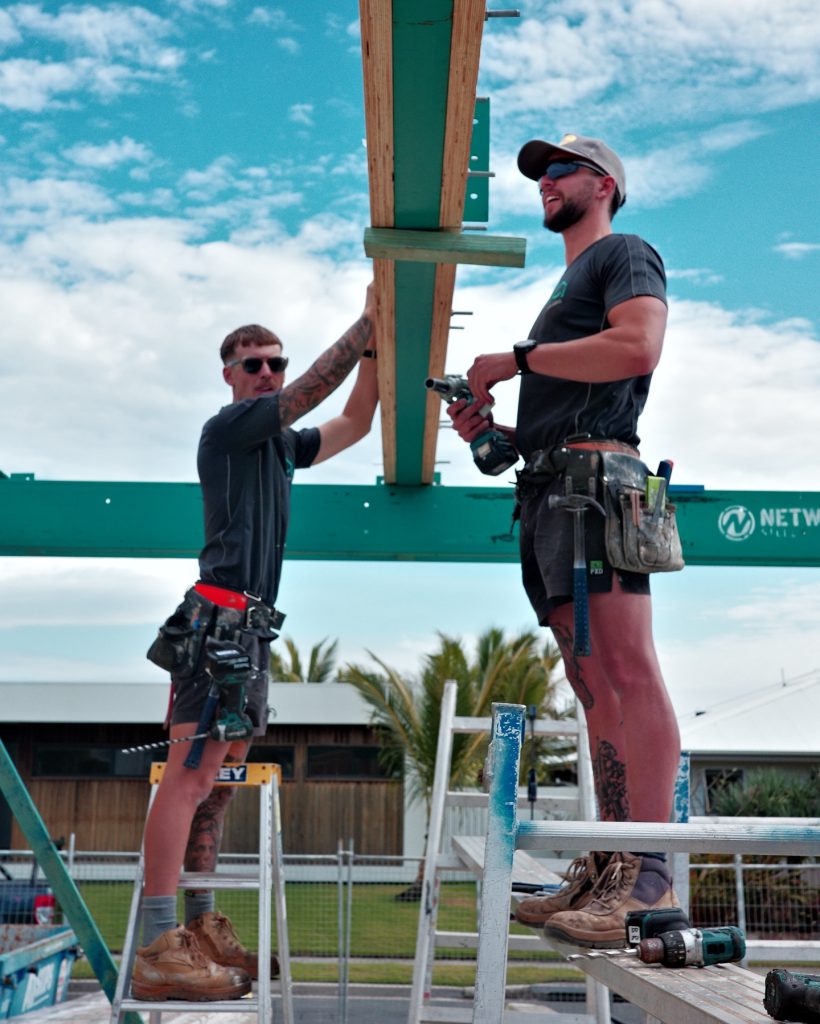
I’ve seen plenty of “high-end” builds that specified expensive finishes and then cut corners behind the wall. JGC’s reputation, at least from the way they describe their process and the outcomes they aim for, leans the other way: performance first, aesthetics second, then making both work together.
Materials selection (the unglamorous backbone)
Materials are where many projects quietly win or lose. On the Gold Coast, you’re fighting corrosion risk, moisture movement, and heat cycling. So the questions that matter sound less like “what colour?” and more like:
– What’s the expected service life in a coastal zone?
– What are the maintenance intervals, and who actually follows them?
– Are the suppliers consistent, traceable, and responsive when something arrives wrong?
– Does the system rely on perfect install conditions (because that’s a gamble)?
A builder with disciplined procurement doesn’t just “order stuff.” They build reliability into the supply chain, lead times, alternates, approvals, storage, protection on site. It’s not sexy, but it stops projects from bleeding time and money.
Detailing: where good builds become great (or quietly fail)
Bold opinion: Most “luxury” builds aren’t luxury. They’re expensive.
Luxury, real luxury, is when the junctions are clean, the tolerances are intentional, and nothing feels like it was bullied into place at the end. That’s detailing.
When JGC talks about precision, I’m listening for specifics: alignment, interfaces, sequencing, and tolerance planning. Because the tiniest decisions, how a flashing terminates, how a wet area is set out, how exterior penetrations are sealed, are what determine whether the home still feels crisp years later.
And yes, artistry matters. But artistry that ignores movement joints, moisture management, or structural logic is just decoration waiting to crack.
The process (from concept to site) isn’t paperwork, it’s risk control
Some parts of this are conversational friend-to-friend advice: if you rush the preconstruction phase, you’ll pay for it twice. Once in variations, and again in delays.
Other parts are hard technical reality. Preconstruction is where you should see:
– A clear brief tied to budget constraints
– Site constraints surfaced early (access, slope, services, overland flow paths, soil conditions)
– Regulatory mapping (approvals, overlays, NCC/BCA implications, inspections)
– A risk register that isn’t a formality (weather, lead times, latent conditions, design dependencies)
When those pieces are handled properly, construction becomes execution, not improvisation.
Concept → plan (short, because it’s simple)
Good planning is boring.
Boring is good.
If the plan is executable, the build stays calm even when unexpected things happen (and they will).
On-site execution: the part everyone watches, and still misunderstands
People think site quality comes from “having good tradies.” That helps, sure. But quality is mostly management: sequencing, supervision, checklists, hold points, and fast decisions when conditions change.
On-site discipline looks like:
– Trades coordinated so nobody is working over someone else’s finished surfaces
– Daily checks that catch misalignment before it becomes a rework chain
– Safety integrated into workflow (not bolted on)
– Deviations documented, assessed, corrected quickly
A strong site team doesn’t just build. They prevent problems.
On-time delivery isn’t luck, it’s systems (and a bit of stubbornness)
Schedules fail when procurement is vague, design decisions are late, or approvals are treated like a side quest. If JGC is serious about time certainty, and their messaging suggests they are, you’d expect to see milestone gating, contingency buffers, and reforecasting when changes occur.
Look, the “on time” claim is easy to say. The credibility comes from what happens when something goes sideways:
– Does the builder rebaseline transparently?
– Are changes priced and documented cleanly?
– Do they protect critical path activities aggressively?
In my experience, the best builders aren’t the ones who never hit turbulence. They’re the ones who don’t pretend turbulence isn’t real.
Communication: no one wants a novel, they want clarity
Client updates often swing between two bad extremes: radio silence or information overload. The sweet spot is structured, predictable reporting, short, specific, and honest.
If you’re getting:
– what’s done,
– what’s next,
– what’s blocking,
– what’s changed (and why),
…then you’re in a healthier project than 90% of the market.
A one-line paragraph, because it matters:
Transparency is a build feature.
What the case studies usually reveal (homes vs commercial)
Luxury residential and commercial builds demand different muscles. Homes are emotional, tactile, and detail-heavy. Commercial spaces are operational, compliance-driven, and often unforgiving on timeframes.
When a builder can do both well, it typically means they’ve got:
– repeatable project management
– reliable subcontractor networks
– tighter document control than the average operator
– an instinct for approvals and lead times
You can “wing it” on a small renovation. You can’t wing it on a tight commercial delivery with services coordination and compliance deadlines.
If you’re considering JGC: what you should expect before anything starts
A proper start doesn’t feel like a sales pitch. It feels like a briefing.
You should walk away with clear answers on scope, exclusions, likely risk zones, a budget range that includes contingencies, and a realistic timeline that accounts for approvals and procurement. If a builder can’t talk cleanly about those items, they’re not ready, or they’re hoping you won’t ask.
And if they can talk about them clearly? That’s usually the first sign you’ve found a team that builds the way they claim to.