
Hot take: if someone promises your pressure-wash results will “last for years” no matter what, they’re selling optimism, not reality.
Most professional pressure washing holds up about 1, 3 years in the real world. That range isn’t a shrug, it’s the honest answer once you factor in what you’re washing, what’s in the air around your home, and whether the surface is sealed or basically acting like a sponge.
And yes, you can absolutely make it last longer… but not by blasting harder.
The quick answer (the one you actually wanted)
If your surfaces are smooth, sealed, and get sun, you’re closer to the 3-year side, especially if you already understand When Should You Pressure Wash Your House?.
If you’ve got porous concrete, heavy shade, lots of humidity, nearby trees, or traffic grime, expect closer to 12 months, sometimes less for problem areas like north-facing siding or the shaded side of a fence.
One-line truth:
A good wash removes grime. It doesn’t change your environment.
What pressure washing covers, and where people get disappointed
Pressure washing is excellent for:
– surface dirt and film
– algae, mold, mildew (especially when paired with the right detergent)
– pollen buildup and general “dingy” weathering
– light organic staining
But there are hard limits. It won’t magically remove:
– deep oil stains in old concrete
– rust bleeding from metal fixtures
– old paint that’s bonded well (and if it *isn’t* bonded well, pressure washing may peel it)
– structural problems, rotted wood, cracked joints, failing caulk, etc.
Look, if the stain is *in* the material and not *on* it, pressure alone isn’t a silver bullet. Sometimes the correct tool is chemical treatment, sanding, resurfacing, or just accepting that the driveway is showing its age (which is not a moral failure).
A downside people don’t love to hear: push pressure too high and you can get etching, fuzzed wood fibers, or forced moisture behind siding if the building envelope has weak spots.
Surface type is the whole game
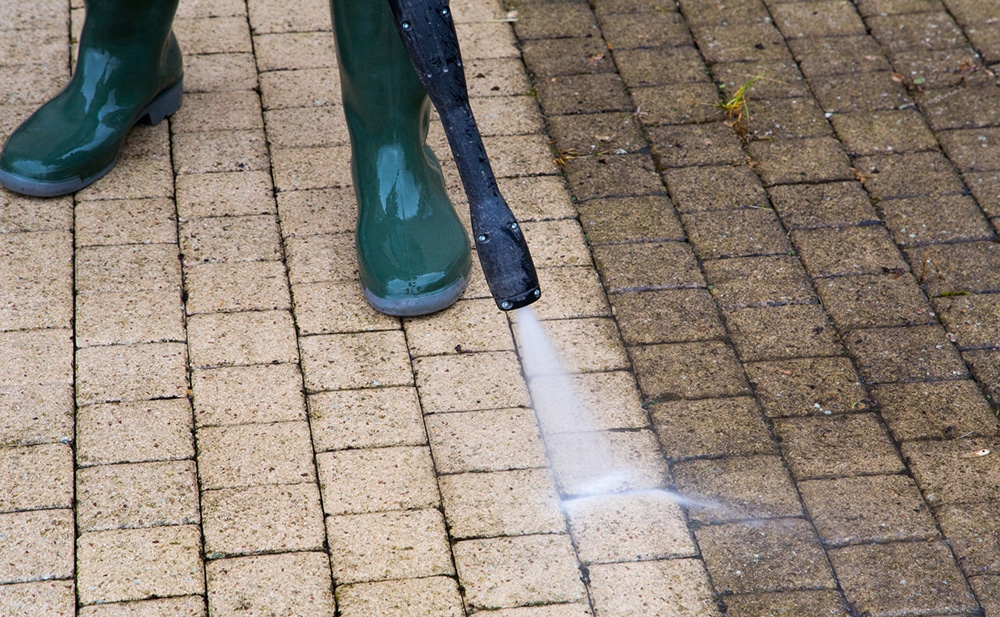
Some materials are basically low-maintenance when they’re cleaned correctly. Others are needy. That’s not you, that’s physics.
Smooth + sealed surfaces (they stay clean longer)
Sealed concrete, vinyl siding in good shape, glazed tile, some composite decking, these tend to rinse clean and resist re-soiling because grime doesn’t have much to cling to. The water sheets off. Spores don’t get a cozy foothold.
Porous surfaces (they look great… briefly)
Unsealed concrete, brick, natural stone, older wood, textured stucco: they trap fine particles and organic matter in microscopic voids. Once that happens, moisture sticks around, and the surface starts “feeding” regrowth.
In my experience, unsealed concrete driveways are the classic case: the first wash looks incredible, then the tire paths start darkening again faster than the rest because rubber, oil mist, and road grit constantly re-deposit there.
A stat that puts the “why is it back already?” issue in context
If you’re dealing with algae/mildew, moisture is the accelerant. The U.S. EPA notes that mold can begin growing on damp materials within 24, 48 hours under the right conditions. Source: U.S. Environmental Protection Agency (EPA), “Mold Course: Chapter 2” (mold basics and growth conditions).
That’s indoors *and* outdoors logic. Give spores moisture + shade + something to cling to, and you’re not waiting three years for a comeback.
Weather: the silent saboteur
Some seasons are basically pressure-wash “erasers.” Others preserve your results.
Humid, rainy stretches
Your surfaces stay damp longer. Organic growth accelerates. Dirt sticks because it never fully dries and dust keeps re-layering. This is where you’ll see the 1-year lifespan, or less on shaded areas.
Freeze-thaw cycles
Now we get technical. Freeze-thaw stresses cracks and joints, opens micro-gaps, and can make coatings and sealants fail faster if they weren’t suited for movement. Once the surface becomes more fractured, it holds grime more easily. You clean it… and it “re-dirties” faster because it’s physically rougher.
Hot, dry weather
Dry heat usually *helps* longevity because surfaces dry quickly and mildew struggles. But it’s not all upside: some materials oxidize or “chalk” in intense sun, especially certain paints and older siding finishes. That chalk becomes a dust that clings and streaks.
Now, this won’t apply to everyone, but if you live somewhere windy and dusty, heat can actually make your place look dirtier faster just because you’re getting constant airborne deposits.
So what shortens the lifespan the fastest?
Shade + moisture + organic debris. That trio is brutal.
You’ll also see faster re-soiling when:
– gutters overflow or drip consistently onto one zone
– sprinklers hit siding or fences daily
– trees drop sap, pollen, and leaf litter onto patios and roofs
– vehicles track grime and oil film onto driveways
– the surface has micro-etching from past over-pressure cleaning (it happens)
Here’s the thing: most “rapid comeback” cases aren’t cleaning failures. They’re site conditions.
Keeping it clean longer (without obsessing)
If you want the wash to last, you don’t need a complicated routine. You need a smart one.
A practical maintenance pattern I’ve seen work:
– Quarterly: light rinse on high-risk zones (north-facing walls, shaded patios, under trees)
– Annually:spot-treat mildew/algae early before it spreads
– Every 1, 3 years: full professional wash depending on material and environment
And if you’re dealing with mildew, chemicals matter more than pressure. A professional will often lean on appropriate detergents and dwell time rather than trying to “sandblast biology off your house.”
(Also: rinse thoroughly. Detergent residue can attract dirt. People forget that.)
“When should I book the next one?” A realistic plan
Forget the calendar for a second. Use triggers.
Book another wash when you notice:
– green/black spotting returning in the same areas
– sidewalks looking dingy even after rain
– siding losing brightness unevenly (streaking is usually the early warning)
– slippery biofilm on decks or pool surrounds
If you want a simple scheduling rule that doesn’t require overthinking:
Most homes benefit from a pro wash every 18, 24 months, then adjust based on what you see.
One neighborhood with heavy tree cover might need yearly. A sunny, sealed, low-dust property might stretch well past two years and still look sharp.
A final opinion (because I have one)
Pressure washing isn’t just about “clean.” It’s about resetting the surface so the next season of grime doesn’t bond as aggressively. Done correctly, it buys you time. Done aggressively, it can actually shorten the time between washes by roughening the material.
So if your last wash didn’t last? Don’t automatically blame the contractor.
Blame your shade tree. Or your sprinklers. Or that unsealed concrete that drinks everything like it’s thirsty.